
Experts highlight their biggest takeaways from the 2023 Genitourinary Cancers Symposium.

Experts highlight their biggest takeaways from the 2023 Genitourinary Cancers Symposium.
During their time conducting on-site interviews on the floor at the American College of Cardiology’s 72nd Annual Scientifc Sessions with Together With the World Congress of Cardiology, HCPLive asked a half dozen expert for their opinion on the single most important piece of data to come from the meeting.
Pharmaceutical experts answer the question: What has been a profound innovation in the pharmaceutical industry that was influenced by the pandemic?
Experts highlight their biggest takeaways from presentations at the 40th Annual Miami Breast Cancer Conference.
During the 2023 ASCO Gastrointestinal Cancers Symposium, Targeted Oncology spoke with Dr. Rachna Schroff, David O’Malley, Benjamin Schlechter, Zev Wainberg, Laura Dawson, and more about exciting clinical trials in gastrointestinal cancers.
There are several challenges in cannabis testing, which can make it difficult to ensure accurate and reliable results. Some of these challenges range from regulatory inconsistencies between states and countries, making it difficult to establish consistent testing standards; complex chemistry and subsequent analysis; sample variability; lack of standardized methods; contamination; and limited research. Here, several analytical chemistry experts weigh in on what they believe are the biggest challenges facing the cannabis testing world.
Experts sit down to discuss what health inequity they each feel is being overlooked when it comes to population health policy initiatives in the United States.
Five analytical chemists offer their views about the most important skills or knowledge that analytical chemists need to be successful in the field.
We recently asked experts in the MS field about the MS prodrome, and where research efforts need to be directed towards in the coming years.
Ophthalmology Times sat down and asked numerous doctors in the field of ophthalmology what they wish they had known when they started out their career.
Experts highlight their biggest takeaways and the most exciting data from the 2022 San Antonio Breast Cancer Symposium.
Real-world data—coming from EMRs, medical insurance claims, prescription data, or any data that can provide insights about patients and their relationship to the healthcare system—is increasingly being used in clinical trials and in drug outcomes measurement to inform processes in the development-to-market chain, which ultimately will improve clinical care for patients. We recently asked these experts, “In your opinion, what is the most exciting use for real-world data in drug development?”
Several multidisciplinary leaders in the field of cancer, from a social worker to an oncology survivorship, navigator share their respective insights on the current state of cancer care.

Cases of advanced prostate cancer are increasing for the first time in 20 years, according to new data from the Cancer Statistics, 2023 report released by The American Cancer Society. In this video, urologists Michael S. Cookson, MD, MMHC; Andres Correa, MD; Derek J. Lomas, MD, PharmD; and Jonathan E. Shoag, MD, react to the findings.
At the 64th American Society of Hematology Annual Meeting, the CGTLive team caught up with experts in the clinical care of patients who are receiving cell and gene treatments. A variety of data were presented on the latest advances in CAR-T therapies that are being evaluated for different patient populations. Specifically, they offered insight into the trends they’ve observed in the development of these treatments, the needs that are lingering where progress has been made, and much more.

Experts discuss their biggest takeaways and most exciting data from the 2023 Gastrointestinal Cancers Symposium.
What is the biggest challenge in infection prevention and control worldwide? Infection Control Today® spoke with key opinion leaders to find out.

A group of key opinion leaders in cardiometabolic health react to the question: Should statin use be expanded to a primordial prevention role?
Experts discuss the latest developments in multiple myeloma, including when to classify patients as high-risk, the treatment paradigm, and new developments on the horizon.
The 2022-2023 winter respiratory season has hit hard, with flu experiencing a surge earlier than is typically seen. To take the pulse of where we are this flu season and what can be done to help prevent the spread, we reached out to 3 health care providers.
Initiated in October 2021, TSC Steps is a phase 1/2 study that is the first of its kind to evaluate a targeted, disease-modifying therapy for preventing or delaying seizure onset in tuberous sclerosis complex (TSC) using a mechanism based approach. Led by Darcy Krueger, MD, PhD, the study use TAVT-18, a novel formulation of sirolimus (Ramapune; Pfizer), an FDA-approved medication for TSC that aims to regulate the target of rapamycin signaling pathway. This discussion talks about how sirolimus had been previously used and the nuances with treatment decisions.
Experts discuss their key takeaways and highlight important abstracts presented at the 2022 ASH Annual Meeting.
We asked a variety of lymphoma experts what unmet needs they still believe must be filled in their respective fields. Oncologists focus on multiple spaces, such as diffuse large B-cell lymphoma, mantle cell lymphoma, follicular lymphoma, and more. Some answers included the need for more treatment options to help treat patients, to further understand why patients relapse, and move away from using chemotherapy in the front-line setting.
The healthcare-associated infection, C difficile, can be especially problematic for patients and clinicians. It is estimated that between 15% to 30% of patients who respond to antibiotics experience recurrent C difficile. And a second recurrence rate of 40% can happen to those who have a resolved first recurrence. This subset of patients who get additional recurrences can begin to experience a revolving door of healthcare interactions, diminished quality of life, and severe health consequences. In this video segment, clinicians and stakeholders offer some insights for how a biotherapeutic could help these patients.
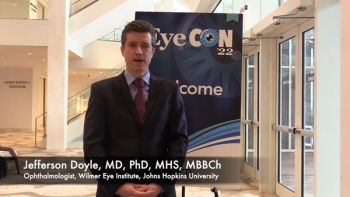
In this episode of Behind the Science, the staff at Ophthalmology Times talked to several physicians recently, posing the question “What are you most excited about in 2023?”