
David Canes, MD, discusses his recent Journal of Urology paper, “Harnessing generative artificial intelligence to improve efficiency among urologists: Welcome ChatGPT.”

David Canes, MD, discusses his recent Journal of Urology paper, “Harnessing generative artificial intelligence to improve efficiency among urologists: Welcome ChatGPT.”
Zoe Diana Draelos, MD, offers insights into her practices and individualized methods for treating rosacea in her patients.
Peter Graves, BSN, RN, CNOR, and Maureen Spencer, MEd, RN, CIC, FAPIC, present the financial impact of surgical site infections, what is causing them, and what can be done to reduce them.

As cannabis slowly gains a foothold in US medicine, psychedelics seem to already inhabit a place of their own, yet their role remains undefined. Dustin Sulak, D.O., founder of Integr8 Health and medical cannabis education resource Healer.com, shares his professional experience with psychedelics as a treatment option for patients in his practice.
Beth Faiman, PhD, CNP, joins Oncology Nursing News to discuss key developments in the landscape of multiple myeloma and the growing need for nurse practitioners and physician assistant education in this space.

Eric Rubenstein, PhD, assistant professor, Department of Epidemiology, Boston University School of Public Health, discusses the findings of his recent study aimed at quantifying students with disabilities experiencing homelessness, compared to students without disabilities. Across the 7 states and Washington, DC, authors found that 4.7% of students with disabilities experienced homelessness, 58% greater than the percentage of students without disabilities (95% confidence interval 1.57-1.59).

Margaret Rosenzweig, PhD, CRNP-C, AOCNP, FAAN, discusses how nursing-led palliative care may help to improve advanced care planning uptake and increase end-of-life discussions in patients with advanced cancer. Additionally, she highlights the importance in including nurses as part of a holistic cancer care team, having end-of-life conversations with patients earlier, and the potential difficulty of implementing training to spark end-of-life conversations.

Emanuela Gionfriddo, MD, discusses her work in PFAS analysis and about “greener” approaches to analytical chemistry.

Joseph Hernandez, CEO, Blue Water Vaccines, discusses the development of intranasal vaccines as an alternative for traditional vaccines.

Researchers at NYU have developed a single score to describe the level of cytokines in the saliva, and this score is linked with the severity of clinical gum inflammation, according to the study. Three dentist members of the research team help explain the significance of the study’s results and what future research is planned.

Patricia Hunt, BS, MS, PhD, discusses the association between prenatal development and parental age. Research has shown the incidence of chromosomally abnormal eggs is strongly influenced by maternal age. Further influence has been observed from maternal environment, leading to impacts on events in the fetal ovary. Both of these factors influence maternal-fetal health.

Stephen Greene, MD, offers perspective into new research he participated in which indicates patients hospitalized for heart failure at hospitals in rural settings have worse outcomes than those hospitalized at hospitals in urban settings, with this disparity becoming more significant for Black men and women.

Faruk Capan, CEO, EVERSANA INTOUCH & Chief Innovation Officer, discusses the arrival of Chat GPT and generative AI in the public consciousness.
Dr. Mary Boname, founder of Montgomery Eye Care, discusses what makes her business model unique and effective.

Stuart Staggs, senior director of strategic programs at McKesson, discusses community oncology challenges, advancing health equity, practice considerations for Enhancing Oncology Model, updates around The US Oncology Network, and more.

Ravi Parikh, MD and colleagues at the Department of Ophthalmology, NYU Grossman School of Medicine presented a paper on the “biosimilar paradox” at the 2023 Association for Research in Vision and Ophthalmology (ARVO) Annual Meeting in New Orleans, Louisiana.

A recent study found that shortages of the bladder cancer drug BCG have led to variation in state treatment patterns for NMIBC. In this interview, study author Brian Chun, MD, discusses the findings. Chun is a urology resident at the University of Pittsburgh Medical Center in Pennsylvania.

The prevalence of autism is up in the United States, as data suggests approximately 1 in 36 will be diagnosed with autism spectrum disorder. Thomas Megerian, MD, Ph.D, FAAP, Clinical Director, Thompson Autism and Neurodevelopmental Center at CHOC, explains this increasing trend has been taking place even before the onset of the COVID-19 pandemic. Megerian explains why early intervention and continued data collection is so important for manifestation patterns, treatment, and awareness.

Given the large number of patients diagnosed with cancer and amount of data produced during cancer treatment, interest in the application of artificial intelligence to improve oncologic care is expanding and holds potential. Here, Tufia C. Haddad, MD, discusses how experts can leverage AI to improve care for their patients with cancer.

Christopher D. Blosser, MD, discusses the goal of the Cancer and Organ Transplant Clinic at Fred Hutchinson Cancer Center, which offers consulting services for organ transplant candidates and patients with cancer.
Jonathan Miller, MD, pediatrician and chief of primary care, pediatrics, at Nemours Children's Health in the Delaware Valley, spoke about the latest data regarding early HPV vaccination in children as young as 9 years at the 2023 Pediatric Academic Societies meeting
Stephanie Jackson, DNP, MSN, RN, AOCNS, BMTCN, discusses how her institution improved double-check compliance with high-alert medications.
Camilla Jamieson, MRCVS, DACVIM, heatstroke prevention in horses, preventing heatstroke, signs to look out for, and more.

Lauren Pace, MD, obstetrician-gynecologist at the University of Alabama at Birmingham, discusses a recent study on how sedation during abortion care differs based on patient race.

Seekwell founder Ron Shimoni joins to explain how the company is using advanced computing to help determine the best use of different batches of hemp extract, and why this could be a key to unlocking the full potential of cannabis extracts.

Ruben Mesa, MD, discusses the use of momelotinib in the phase 3 MOMENTUM trial.
Diana M. Cejas, MD, MPH discusses about her two presentations on disability and neurology that she gave at the 2023 American Academy of Neurology (AAN) Annual Meeting.
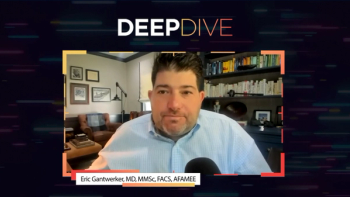
Eric Gantwerker, MD, MMSc, FACS, AFAMEE joins to discuss Top Derm, a medical video game designed for dermatologists, by dermatologists.

Beth Garner, MD, MPH, chief scientific officer at Ferring Pharmaceuticals, explains what fertility means in the United States vs across the globe, as well as current unmet needs in reproductive health and the latest trends in fertility treatments.

Dr. William Soliman is the founder and CEO of the Accreditation Council for Medical Affairs (ACMA), a global organization devoted to setting standards in pharma. ACMA is dedicated to ensuring pharmaceutical companies’ medical science liaisons are board-certified in medical affairs.