
Deep Dive - Season 3

Heather Saunders, MPH, RN, CIC, is an infection preventionist and a member of ICT’s Editorial Advisory Board. She’s the Director of Infection Control for the Office of Population Health at Johns Hopkins University and she joins Deep Dive to talk about the many issues surrounding infection prevention at nursing homes.

CareQuest Institute for Oral Health, in collaboration with Dental Data Exchange Project recently developed and published the first implementation guide to help bridge the communication gap between primary care and oral health care. This publication—the HL7® CDA® R2 Implementation Guide: Dental Data Exchange, Release 1, STU 1 - US Realm—is designed to facilitate care coordination and create best practices for electronic exchange of patient data between dental and medical professionals. We spoke with Sean Boynes, DMD, CareQuest Institute for Oral Health’s vice president of health improvement about what’s in the implementation guide and the impact they hope it will have on patient care, and cooperation between medical and dental care providers

Dr. Mark Lebwohl takes us on a deep dive into the recent delay in approval of Janus kinase (JAK) inhibitors by the FDA. The delay comes from the FDA’s recently completed review of tofacitinib, a first-in-class JAK inhibitor approved to treat arthritis, which started in February of 2021, after the FDA issued a warning for heart-related problems and possible malignancies associated with the drug. Now, the FDA has put a hold on approval of all other JAK inhibitors and has issued a black box warning to certain JAK inhibitors currently on the market. Some of the JAK inhibitors for dermatologic conditions on hold include baricitinib, abrocitinib, and upadacitinib. In this interview with Dermatology Times Associate Editor Morgan Petronelli, Lebwohl discusses the delay, as well as the benefits of JAK inhibitors for inflammatory skin diseases and his prediction for the future of this drug class.

Dr. Monica Mallampalli will be breaking down the complexity of what biosimilars and biologics are and current approved biosimilars on the market for breast cancer and autoimmune conditions such as arthritis. She discusses how they are a more affordable and feasible treatment option for women with various chronic health conditions. She explains how biosimilars impact women’s health and the important role health care providers can play in educating women about biosimilars and their future potential as a treatment option.

Shereen Stutz and Mark Alwardt of McKesson discuss how the rise in oral oncolytics during the COVID-19 pandemic allowed pharmacies to be more innovative and to become an even more integrated part of the oncology care team.

James L. Knoll, IV, MD, gives an overview of his long career in forensic psychiatry, where he has worked with difficult and potentially dangerous patients. In this interview he discusses the relationship between psychiatric illnesses and criminal behavior, the challenges of treating patients in a correctional setting, and how to leave a stressful workplace behind at the end of the day.

Doctor Kevin Kavanagh has been out in front of developments during the COVID pandemic, sometimes way out in front. He called for booster shots for older Americans weeks before the CDC did. He also foresaw, and wrote about, the dangers the delta variant presents before most other medical experts did. But what made this retired ear, nose and throat surgeon take such a deep dive into the world of infection prevention?

Utilizing its innovative whole-body scanner, Q Bio develops breakthrough technology to measure changes in the human body like never before. Q Bio unveiled the first clinical "digital twin" platform, Q Bio Gemini, to capture and monitor comprehensive baseline patient health in a scalable virtual model. In this interview, Q Bio CEO Jeff Kaditz discusses the company’s leading technology that is driving this innovation.

Next month, the American Academy of Pediatrics will be publishing Dr. Candice Jones' book, “High Five Discipline: Positive parenting for happy, healthy, well-behaved kids.” We took a deep dive into lessons that both pediatricians and parents can glean from this book, from the difference between positive and negative parenting, to how to handle those sometimes-tumultuous teenage years.

Christie Ballantyne, MD, Director of the Center for Cardiometabolic Disease Prevention at Baylor College of Medicine, discussed the possible issues his field sees in the rate of innovation and research relative to the process of regulation. Ballantyne also highlighted upcoming drug classes he has the most interest in for cardiovascular disease management, as well as his reasoning for why currently available agents are not being best utilized still.

Stephanie Mercado, CEO and Executive Director of NAHQ (National Association for Healthcare Quality) discusses NAHQ’s mission to improve healthcare quality and what improvements, as well as shortcomings have been made. Mercado also shared what steps need to be taken in healthcare as a whole to continue improving the quality of care.

Josh Ludwig spoke with CancerNetwork about how ScaleReady, a joint venture between industry leaders launched in January, is equipped to make cell and gene therapy practical and viable. Ludwig touched on the partnership, as well the G-Rex platform, important processes for successful commercialization of cell and gene therapy, and what’s next for ScaleReady.

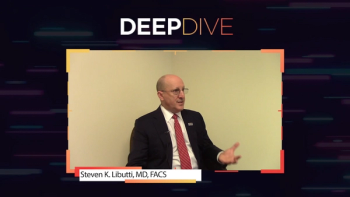
Previewing New Jersey’s first free-standing cancer center, Dr Steven Libutti, director of the Rutgers Cancer Institute of New Jersey, speaks with The American Journal of Managed Care on how the upcoming Jack and Sheryl Morris Cancer Center will open possibilities in cancer care that were otherwise unavailable in the state. Dr Libutti discusses the capabilities in oncology care and clinical trial research that will be provided at the Rutgers-affiliated center, and its implications for a state marked by one of the highest cancer rates nationwide.

Dr. Deena Kuruvilla, a headache specialist and the medical director of the Westport Headache Institute, discusses the latest updates in the care of patients with migraines. She offered insight into the access challenges faced by patients and the latest data on the newest therapies to enter the market and the ongoing clinical development in the pipeline.

How can researchers encourage patient participation in clinical trials and ensure their comfort during the process? Dr. Miguel Villalona-Calero discusses several aspects of clinical trials from a patient standpoint, from common misconceptions to what the most rewarding aspects are.

On this episode of Deep Dive, Phil Tucak describes the devastating aftermath of the Australian wildfires and their impact on wildlife, plus other detailed information on the topic including wildlife care facilities that have been established, a recent mouse plague, and more.

The COVID-19 pandemic forced medical practices to rapidly change their in-person visits to virtual ones, but how do their patients feel about these new forms of health care? In a recent study, a survey-based assessment of varied telemedicine experiences was evaluated by a group of investigators led by Kara L. Watts, MD, who discusses their findings in this interview.

Infection preventionists hold a unique place in a hospital hierarchy. States do not mandate that hospitals have an infection preventionist on staff. They also don’t mandate that professionals who work as infection preventionists need to have certification as such. Lisa Waldowski talks about the challenges that infection preventionists face, challenges involving COVID, and also non-COVID-related challenges.

Yan Lavrovsky, MD, PhD discusses the RPH-104 Molecule, a biological project that is currently being developed to treat a variety of inflammatory diseases, metabolic diseases, recurrent fever, joint lesions, and rashes. Dr. Lavrovsky discusses why the FDA approval of the molecule is so groundbreaking, future research, and what first sparked his team’s interest in researching and developing the RPH-104 molecule.

A recent study documented a connection between patients with gingivitis and patients with clinical depression. Dr. Sam Low joins us to discuss the potential link between oral health and mental health, the oral systemic connection and why gum health should be promoted more by dentists, as well as by medical doctors.

Dr. David Weber joins Deep Dive to discuss the logistics and reasoning behind the FDA's decision around COVID-19 vaccine booster dose authorization—both for severely immunocompromised patients as well as the general adult population. Dr. Weber gave insight into the pros and cons of the US pursuing COVID-19 vaccine booster doses at a time when just over half the population is fully vaccinated.