
Paul Harari, MD, discusses upright proton cancer therapy, which will be offered at University of Wisconsin Health.

Paul Harari, MD, discusses upright proton cancer therapy, which will be offered at University of Wisconsin Health.
Terence Rooney, MD, explains the innovative research methods that Janssen utilizes and the benefits of precision medicine in the treatment of psoriatic arthritis and discusses the recent findings indicating that guselkumab provided patients with psoriatic arthritis with sustained improvements in health-related quality of life through 2 years. Rooney is Vice President and Rheumatology and Maternal-Fetal Immunology Disease Area Stronghold Leader at Janssen.
Primary care providers are often the clinicians who first diagnose patients with HIV or see patients who might be at risk for it. However, it is well-known that medical school students get limited training and education for treating members of the LGBTQ+ community. And many may have limited clinical care experience with these patients in their practices. As such, primary care physician, Dr. Marty Player, offers some insights into gender affirming care and strategies when having conversations around sexual health and topics like PrEP and HIV testing.

As more US states legalize cannabis for either medical or recreational purposes, more patients may start using cannabis or be open about discussing their past and/or current use with their clinician. On today’s episode of Deep Dive, Henry Mahncke, PhD, research neuroscientist and CEO of Posit Science, discusses the impact of cannabis use on brain health and shares his tips for how to help patients safely navigate their cannabis use.

In the wake of the FDA approval of the EksoNR robotic exoskeleton for use in multiple sclerosis rehabilitation, Dr. Francois Bethoux, the chair of Cleveland Clinic’s Department of Physical Medicine, spoke with NeurologyLive about the functions of the exoskeleton and its use in a real-world clinic setting. He also touched on the available data, the major take-home points for clinicians, and the need to further analyze large datasets to identify the optimal patient populations for it.

Robert J. Silver, DVM, MS explains the ins and outs of nutraceuticals for musculoskeletal arthritis in pets. This included the nutraceuticals available on the market, plus the advantages of a multimodal approach, controversy surrounding these products, and more.
Without infection preventionists, the COVID-19 pandemic would have been far worse and lasted far longer. But at what cost to the infection preventionists? Bernadette Mazurek Melnyk, PhD, and her colleagues examined how COVID-19 affected infection preventionists’ mental and physical health, and in an exclusive interview, she discusses how facilities and infection preventionists themselves can mitigate burnout.

Dr. Zacariah Hildenbrand shares his various research interests as well as the challenges facing the cannabis and hemp cultivation industry. Dr. Hildenbrand also shares a preview of his upcoming talk and overall session he will chairing at Cannabis Science Conference East taking place September 14-16 in Baltimore, Maryland.

In an interview with Pharmacy Times, Ron Lanton III, Esq, discussed the recent Supreme Court decision in Dobbs v. Jackson Women’s Health and what this could mean for health care providers. In the interview, Lanton said the decision leaves many issues ambiguous, which will most likely result in litigation around the country in the coming weeks and months.

Lisa Vigil Schattinger, MSN, RN, discusses her experience with medical aid in dying, and what oncology nurses need to understand when supporting patients at the end of their lives.

Paresh C. Shah, MD, a surgical oncologist at NYU Langone Health, gives an overview of the current standards for treating esophageal cancer, as well as what patients and providers can expect in the weeks after surgery.

John O. Mascarenhas, MD discusses the emerging treatments for myelofibrosis for patients being treated in the frontline setting and for those who have received prior ruxolitinib.

Ash B. Alpert, MD, MFA, highlighted disparities unique to patients with cancer who are part of the lesbian, gay, bisexual, transgender, and queer (LGBTQ+) community. In particular, they touched on 2 studies that they presented at the 2022 American Society of Clinical Oncology Annual Meeting. These studies focused on cancer risk factors unique to transgender patients and the impact of interpersonal violence on cancer risk for this population. Moreover, Alpert discussed what cancer care providers can do to create a more welcoming environment for LGBTQ+ patients with cancer

As recent as 2 decades ago, the thought of applying genetic insights to clinical care was merely a pipe dream. Today, genetic testing is available and more accessible, and translational research continues to show the value of these insights into both personalized approaches to care as well as the development of new, targeted therapeutics. Yet, we still have so much to learn, and that is the motivation behind a large-scale community research initiative that will collect genetic data from 100,000 people to assess for actionable information related to certain types of cancer and cardiovascular disease. In an interview with CGTLive, Daniel Judge, MD, a professor of medicine in cardiology at the Medical University of South Carolina, discusses some of the translational science that has him especially excited, including applications of gene editing and silencing for cardiology-related disorders.

Dr. John Martin discusses the world’s first single-probe, whole-body ultrasound device.

Neville Sanjana, PhD, explains how whole exome sequencing can help predict whether patients respond to cancer immunotherapy.
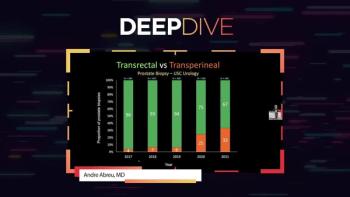
Andre Abreu, MD, of the University of Southern California, Los Angeles shares what makes his institution’s MRI fusion biopsy and focal therapy programs unique.
Dr. Peter Lio joins us to discuss the differing clinical presentations of atopic dermatitis in pediatric patients, and how to recognize those differences. Dr. Lio also discusses the emerging topic of shin guard dermatitis linked

In a conversation with Marco Meglio of NeurologyLive, Dr. Francois Bethoux shared his insight into the research he and others conducted of a recently approved exoskeleton for use in the rehabilitation of patients with multiple sclerosis. He spoke about how such tools can be leveraged in clinical care and the benefits they bring to the patients, as well as the possible future use of these devices and the potential to enable patients to utilize them at home.

Ambassador Deborah Birx, MD, is a world-renowned medical expert and leader whose long career has focused on clinical and basic immunology, infectious disease, pandemic preparedness, vaccine research, and global health. Birx served the United States as an Army Colonel and later, running some of the most high-profile and influential programs at the U.S. Centers for Disease Control and Prevention and U.S. Department of State.

While many would like to believe the COVID-19 pandemic is over, that’s definitely not the case. Jeff Andrews, MD, vice president of Medical Affairs, Integrated Diagnostic Solutions, BD Life Sciences, joins Physicians Practice to discuss a recent poll on physicians' attitudes toward testing.
The rising mental health crisis in the United States has shown staggering increases in rates of mood disorders and substance abuse, particularly among youth. On today’s Deep Dive, Jeff Temple, PhD, professor, licensed psychologist, and vice dean for research at University of Texas Medical Branch School of Nursing, discusses external triggers along with the COVID-19 pandemic that have exacerbated adverse behavioral health outcomes in adolescents and strategies for community stakeholders seeking to mitigate this crisis.

Gregg Slyvester, MD, MPH, chief health officer at CSL Seqirus, discusses an FDA-approved cell-based flu vaccine for children as young as 6 months, trends in childhood vaccination rates, and how to prepare for the upcoming flu season.

Deeb Eid, PharmD, discussed how pharmacists and technicians are working to advance pharmacy practice and why this is so necessary. The COVID-19 pandemic accelerated many changes in health care, and particularly in the pharmacy field as pharmacists look toward gaining provider status.
COVID-19 has extended its tentacles to all things in the medical field including how clinical trials are performed. This can be seen in how the COVID-19 vaccine trials moved these towards decentralization. Listen in how the move towards decentralization has benefits for industry and patients alike. Also, Dr. Owen Garrick, Chief Medical Officer of CVS Health Clinical Trial Services, offers some insights to achieving greater diversity overall in studies.

Stephen Greene, MD, provides a snapshot of trends in characteristics and outcomes among people with heart failure with preserved ejection fraction in the US by taking a Deep Dive into work he presented at the European Society of Cardiology Congress 2022.

With ongoing gaps in mammography screening and patient anxiety that often accompanies screening exams and a possible diagnosis of breast cancer, patient education is critical. Accordingly, in a recent video interview, Amy K. Patel, MD, discussed the potential impact of new patient-oriented breast cancer screening guidelines from the National Comprehensive Cancer Network.

Doug Long, vice president of industry relations at IQVIA, discussed the specialty and traditional categories in pharmaceutical spending and the parsing of them into smaller subcategories.

Twenty-four month data from the DERBY and OAKS studies better indicate the overall safety of pegcetacoplan for geographic atrophy (GA) secondary to age-related macular degeneration (AMD). Pegcetacoplan is an investigational, targeted C3 therapy, studied in over 1200 patients between the two phase 3 studies. The safety data were presented at the 2022 American Academy of Ophthalmology Meeting in Chicago. In an interview with HCPLive, presenting author David Boyer, MD, Senior Partner, Retina-Vitreous Associates Medical Group, discussed the observed safety signals and their connection to the greater benefit of the drug.