
Julio Aguirre-Ghiso, PhD, discusses his new role leading the new Cancer Dormancy and Tumor Microenvironment Institute at Albert Einstein Cancer Center, his plans for the institute, and the unmet need addressed by the first-of-its-kind program

Julio Aguirre-Ghiso, PhD, discusses his new role leading the new Cancer Dormancy and Tumor Microenvironment Institute at Albert Einstein Cancer Center, his plans for the institute, and the unmet need addressed by the first-of-its-kind program
With the COVID-19 pandemic exacerbating emotional strain as well as time away from home for many in the medical field, how are health care professionals finding ways to give patients their best attention and efforts? Several doctors explain the methods in which they channel in on patients’ needs and alleviate stress and distractions, from time management to maintaining resilience and positivity despite the difficulties faced.

Dr. Carlos del Rio spoke on the FDA’s authorization of a booster COVID-19 vaccine dose for immunosuppressed patients this week, supported by data showing that immunocompromised patients including organ transplant recipients generally fare worse in COVID-19 vaccine response.
Mental wellness is of the utmost importance, especially for those in the healthcare and oncology fields. Nagla Abdel Karim, MD, a professor of medicine, and medical director, Georgia Cancer Center, discusses the importance of maintaining good mental hygiene, as well as the need for outlets and resources to discuss these topics for cancer care providers.
In this segment, 5 leading cardiologists offer their perspective on what they see as the most exciting area in cardiology. In recent decades, cardiology is among the most exciting specialties in medicine. Practical Cardiology senior editor Patrick Campbell asks leading experts in cardiology with the simple question: What is the most exciting aspect of cardiology today?
Dr. Michael F. Myers joins Wellbeing Checkup to discuss mental wellbeing for other physicians during the COVID-19 pandemic.

On this episode of Inside the Practice, the founder of Fear Free—Dr. Marty Becker—shares what inspired him to launch Fear Free, specific stories he’s had while incorporating it in the clinic, and what he sees for its future.

Dr. Misha Rosenbach takes us on a deep dive into climate change and its effect on dermatology. From increases in vector-borne diseases to wildfires causing in uptick in atopic dermatitis, climate change affects more than just the environment, but also our health. Dr. Rosenbach explores not only the effects of climate change, but also provides insightful tips on how physicians can help.
The COVID-19 pandemic changed so many things about our daily lives, including how medicine in practiced, and how patient care is administered. As we look forward, oncologists from Moffitt Cancer Center and Mayo Clinic discuss the lessons, services, and changes to practice that will endure in a post-COVID world for the oncology community.

Rebecca Madsen, chief consumer officer or UnitedHealthcare, discusses the company’s use of predictive analytics to identify members who may need help with food insecurity, housing and other social determinants of health.

Bash Halow & Dr. Marc Rosenberg are back on Second Opinion to debate and discuss telemedicine in veterinary settings.
Dr. John Buse discusses treatment of type 2 diabetes on the long-awaited results of a first-of-its-kind study that compared 4 common drugs for type 2 diabetes against each other to evaluate efficacy and safety as an add-on, second-line treatment to control hyperglycemia.

To respect their patients’ gender identity, should ob-gyns use the terms “pregnant woman” or “pregnant persons” when referring to patients? Two maternal-fetal medicine specialists debate.
In many workplaces, you’ll find employees listening to music as they go about their jobs, and surgeons, it seems, are no exception to this. For this episode of “Behind the Science,” we spoke to 5 urologists who discuss their music preferences when working in the OR.

Dr. Mitchell Elkind, the sitting president of the American Heart Association, offers insight into the organization’s recently released scientific statement calling for improved comprehensive post-stroke management, with a particular focus on the crucial role primary care providers can play. Elkind additionally spoke to how this guidance ties into the recent updated secondary prevention guidelines issued in June 2021, and how the a holistic approach to stroke care is vital to good outcomes for patients.

Dr. Michael Assouline joins to discuss new technology for screening for and diagnosing ophthalmic conditions. EyeLib is described as an AI-device that “allows for rapid fully automated advanced and comprehensive ophthalmological diagnoses and consequent referrals to the appropriate specialists.” Essentially, the idea is that all the medical devices used at the beginning of a check-up are combined into one streamlined machine.

With 2021 marking the 40th anniversary of the first cases of HIV/AIDS, The American Journal of Managed Care® spoke with several experts on the possibility of a vaccine in our lifetime, as well as what criteria such a vaccine must satisfy. Can it both prevent new infection and reduce current viral load? The speed at which vaccines against COVID-19 were developed has only served to highlight the lack of one in the HIV/AIDS space.

Chevon M. Rairy discusses how Cancer Treatment Centers of America has partnered with CVS Health to bring infusion of cancer therapies into patient’s homes.

Tasha McNerney, CVT, CVPP, VTS shares insight on using a laryngoscope - from tips and tricks to curtailing bad habits to the laryngoscopes she recommends for veterinary professionals.
Donna Hallas, clinical professor at New York University Meyers College of Nursing, discusses how her pediatric nursing students dealt with being deployed into adult units when COVID first hit; and how she coached parents to incorporate more play time with their children to alleviate the stress and anxiety of the pandemic.
Psychiatric Times asked their contributors how they approach the management of sleep issues, as approximately 1 in 3 patients have difficulties with sleep.
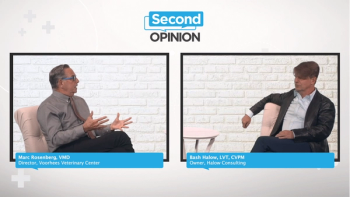
Dr. Marc Rosenberg and Bash Halow return to Second Opinion to discuss millennial pet owners and how they are taking the pet industry by storm and demanding the best care for their pets.

A panel of experts from Cancer Treatment Centers of America discuss their post-COVID predictions for the oncology community, and addressing disparities in early screening measures.
Editors at Patient Care asked 5 physicians, all leaders in their respective fields, to talk about wishes and hopes for the future of patient care.

Contemporary Pediatrics spoke with Dr. Sara Bode about a return to the classroom and what protocols will need to be put in place to keep both vaccinated and unvaccinated children safe this fall.

At Raleigh Radiology in North Carolina, they have implemented an accreditation program that is training lay persons to be patient navigators – individuals who will help newly diagnosed patients traverse the complicated path of breast cancer treatment. Here, Dr. Laura Thomas, head of breast interventional radiology program, and patient navigator Miagy Alvarez share what the goal of the program is and how it works.

A trio of epilepsy experts from NYU Langone’s Comprehensive Epilepsy Center, including Blanca Vazquez, MD; Katherine S. Inoyama, MD; and Daniel Friedman, MD, discuss their current roles and the work that they’re involved in at the center, as well as detailed what separates NYU’s approach to providing this level of care to individuals with epilepsy from other institutions.

Martin S. Tallman, MD, a Professor of Medicine at Weill Cornell Medical College and the Chief of the Leukemia Service at Memorial Sloan Kettering Cancer Center, discusses his role as President of the American Society of Hematology, as well as developments and challenges facing the hematologic oncology field.

Dr. Laurel Himes describes the animal sanctuary located at Beach Animal Hospital—Tooney’s Last Resort. She touches upon how it was founded, juggling between being a practice manager and helping run this philanthropy, plus she shares details of the unique pets that have stayed at the animal sanctuary.

Interchangeability designations are regulatory labels assigned to certain FDA-approved biosimilars that allow for the product to be substituted for a reference product at the pharmacy level. The idea behind them is that pharmacists can provide patients with biosimilars instead of reference products without seeking approval from a physician, thus making biosimilars more easily accessible to patients, similarly to how generic drugs are. These experts give their opinions on whether they feel that these designations are meaningful and necessary and why.