Clinical

Shay Moinuddin, MHA, CANS, RN, who has been with the Few Institute since 2008 and manages the day-to-day operations there, talks with us about stackable aesthetic treatments, how the aesthetic world has changed in the last 10 years, and how allied health care workers should be utilized in the practice. Shay has had extensive training in injecting all brands of FDA-approved dermal fillers and neurotoxins and brings her perspective as a non-physician injector to this discussion.

This episode discusses the current state of the pharmacy technician role, how COVID-19 changed the perception of pharmacy technicians, and advice for technicians who wish to advance their roles and responsibilities in the pharmacy.

Women physicians today are suffering from record-breaking levels of burnout. Tammie Chang, MD, was one of those women. When she began to feel dangerously burnt out, she decided to write a self-help book for women struggling to balance their personal and professional lives. Tammie writes for these women in hopes that they can become empowered and learn to set healthy boundaries in their daily lives.

In recognition of Black History Month, Ozuru O. Ukoha, MD, highlights barriers that may hinder participation of Black patients in clinical lung cancer research, how these disparities impact outcomes, and how initiatives such as the American Lung Association’s Awareness, Trust and Action campaign may work to increase enrollment. He not only discusses short-and long-term goals of the campaign, but what the oncology community as a whole can do to be more inclusive of diverse patient populations.

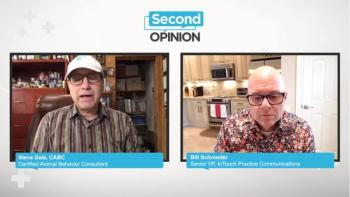
As social media continues to play a key role in how practices operate, is traditional marketing no longer necessary? Steve Dale and Bill Schroeder tackle the benefits and disadvantages of both while exploring how both can be used to reach as many clients as possible.

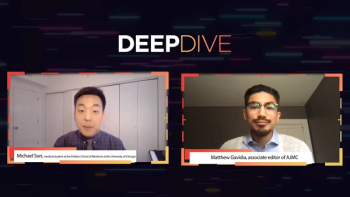
Findings of a recent Health Affairs study showed that race and bias were significantly associated with negative patient descriptors in the electronic health record. On today’s Deep Dive, Michael Sun, first author of the study and a medical student at the Pritzker School of Medicine at the University of Chicago, discusses the impact of potentially stigmatizing language on racial and ethnic health care disparities and building awareness among clinicians.

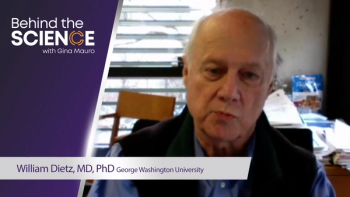
Editors of Managed Healthcare Executive spoke with four healthcare professionals about the relationship between COVID-19 and obesity. The professionals were asked “at what degree is obesity a risk factor for severe COVID-19 and what are the reasons for obesity increasing the risk?” Each gave their individual views on the matter.

On this episode of Deep Dive, Dr Cynthia Otto sits down with dvm360 to discuss the life of a detection dog at the University of Pennsylvania’s Working Dog Center and explains how they train these dogs to smell anything from explosive devices to COVID-19.

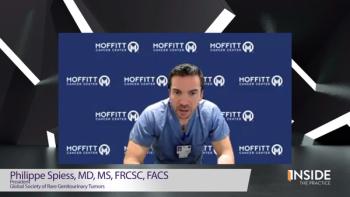
The Global Society of Rare Genitourinary Tumors launched during the pandemic, hoping to give a voice to those who have or treat rare cancers in this space. In a recent interview, Philippe E. Spiess, MD, MS, FRCSC, FACS, and Andrea Necchi, MD, share how they aim to develop an environment that emphasizes education, patient advocacy, and clinical research for this subspecialty—one that has historically failed to receive the spotlight as much as other, more common cancers. Spiess and Necchi serve as President and Vice President of this organization.

Dr. Kathleen B. Digre focuses on opportunities for women leaders in the field of neurology. We spoke at length about her past and present leadership roles, and she shared her perspective on how the field has changed and provided more opportunity for females in the space.

As the country approaches the two-year mark of the COVID-19 pandemic, the healthcare workforce is being battered by burnout. Wayne Sotile, founder of the Sotile Center for Resilience and the Center for Physician Resilience and co-author of the book The Thriving Physician, joins us today to discuss ways to counter the crush of work.

Sarah Temkin, Associate Director for Clinical Research in the Office of Research on Women’s Health at the National Institutes of Health, discusses how the NIH Office of Research on Women’s Health are involved in health care and pharmacy practice. She talks about clinical data pertaining to biological and sociological variables and clinical trials that have been conducted. Additionally, she addresses the upcoming goals and projects on the horizon for the NIH ORWH that may impact the pharmacy field.

In the oncology space, biologic drugs can be very expensive for patients. This can put added stress onto clinicians who may be wary about prescribing a biologic therapy to these patients without knowing whether the patient can afford the medication. Biosimilars, which high are clinically similar molecules that reference originator biologic medications and are offered at a lower price, offer a way to help patients, and practices, save money. Kathy Oubre, MS, delves into how financial toxicity brought on by the inability to afford expensive biologics impacts both patients and providers and hones in on how biosimilars offer a way around those concerns.

On January 28, the FDA approved faricimab (Vabysmo) for the treatment of adults with neovascular age-related macular degeneration (nAMD) or diabetic macular edema (DME). The new approval for the intravitreal-injected bispecific antibody therapy is the first granted to a drug with its targeting pathways, deviating from the popular standard-of-care anti-VEGF therapy drug class for these two conditions—the leading causes of irreversible vision loss in the US. It also comes at a time when many ophthalmologists are seeking means to improve treatment durability and extended time between regimens of intravitreal injection therapy for their patients, who are generally burdened by the administration process and are prone to high risk of treatment discontinuation—and, as such, eventual blindness.

Oncology Nursing News® meets with the lead investigator of a study which revealed that children under 5 are at the highest risk of hearing loss following treatment with cisplatin chemotherapy. Dr. Bruce Carleton discusses the benefits and risks associated with this life-saving therapy, and the challenge of balancing these risks when treating young children with cancer.

Christine Dehlendorf, MD, MAS, is passionate about returning women to the center of decisions made about contraception and family planning. To some the term “patient centered counseling” may sound overused, even gimmicky. But when the topic is how, when, or if a woman wants to conceive, the first job of the clinician is to elicit the patient’s needs and desires as the patient defines them, not to forge ahead based on a preconceived notion of what “a patient like this” should want or should do. Her research focuses on how to facilitate this shift of choice fully back into the patient’s hands.

Long-acting injectables are being studied for both HIV care and prevention and could help in changing the treatment paradigm from a daily oral regimen to a once monthly or even every 2 month injection for therapy. They have shown promise as a potential alternative to people dealing with pill fatigue, stigma, and quality of life issues associated with daily oral therapy. Clinicians offer insights into what medical community is doing right in this area where the challenges remain.

CAR-T cell therapy has dramatically changed the game for many cancer types. Recent findings in a trial examining a second-line CAR-T therapy option for large B-cell lymphoma showed a potential to shift the standard of care. In an interview with CURE®, Joseph McGuirk, D.O., discussed the inspiring ways in which CAR-T therapy advancements are transforming the cancer landscape.

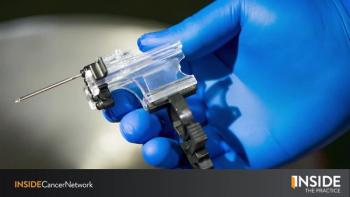
Dr. Matthew Allaway, DO, spoke with CancerNetwork about a prostate cancer biopsy technique that uses the transperineal approach to better detect cancer in harder to reach areas of the prostate. Along with this, Allaway touched on the American Cancer Society’s annual report, “Cancer Facts & Figures 2022” and detailed the important findings from a companion study to that information.

With an influx of novel agents hitting the oncology scene across both breast and hematologic spheres, it can become more complicated to differentiate between agent-related patient education and administration details. Therefore, Oncology Nursing News® spoke with 4 oncologists who presented at either the 2021 San Antonio Breast Cancer Symposium of the 63rd American Society of Hematology Annual Meeting & Exposition about the main findings from their presentations and nurse-specific considerations regarding the experimental agents.

Dr. Jean Talleyrand, Co-Founder and Vice-Chairman of the Clinical Endocannabinoid System Consortium (CESC) and founder of MediCann, joins us to discuss medical cannabis research and ongoing projects he is involved in. As a third generation medical provider, Dr. Talleyrand offers his insight into how medical cannabis can be added as a tool for any doctor to consider.

Ahead of a presentation during the 18th Annual International Symposium on Melanoma and Other Cutaneous Malignancies®, Dr. Michael of Memorial Sloan Kettering Cancer Center discusses recent advances in treatment for patients with metastatic melanoma.

Michael Birrer, MD, PhD, discusses his decision to become vice chancellor and director of Winthrop P. Rockefeller Cancer Institute at the University of Arkansas for Medical Sciences, plus his priorities for UAMS.