
A panel of experts discuss opportunities for pharmacists to address the cost of cancer care and enable improved access and outcomes for patients.

A panel of experts discuss opportunities for pharmacists to address the cost of cancer care and enable improved access and outcomes for patients.

Terence Rooney, MD, explains the innovative research methods that Janssen utilizes and the benefits of precision medicine in the treatment of psoriatic arthritis and discusses the recent findings indicating that guselkumab provided patients with psoriatic arthritis with sustained improvements in health-related quality of life through 2 years. Rooney is Vice President and Rheumatology and Maternal-Fetal Immunology Disease Area Stronghold Leader at Janssen.
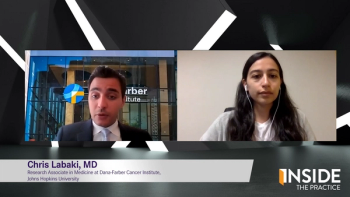
Chris Labaki, MD, Research Associate in Medicine at Dana-Farber Cancer Institute, a recent study published discussing cancer clinical trials and the rising accrual rates after COVID-19. In the interview, Labaki discussed the results observed between the 2 cohorts, what clinicians have learned from this pandemic, and where he hopes to see this research advance in the future.

Psychiatry experts answer the question: What is the first thing you share with your patient when you are about to prescribe a new medication?

Christie Long, DVM, vice president of Modern Animal Hospital breaks down the hospitals unique and innovative features that make pets, pet parents, and staff feel comfortable at the clinic, including no ringing phones and an open concept.
Metformin has been first-line therapy for type 2 diabetes for decades, but recent advances antiglycemic therapies and new data from the Diabetes Prevention Program Outcomes Study have led to questions around role metformin has carved for itself in armamentarium. At ADA 2022, Endocrinology Network asked experts what they thought of recent data and whether it was time to rethink metformin as a first-line therapy.

In this episode of the Deep Dive, Professor Robert Bollinger, an infectious disease professor at the Johns Hopkins University School of Medicine, and Sebastian Seiguer, CEO and co-founder of emocha Health, discuss tuberculosis.

At the recent Association for Professionals in Infection Control and Epidemiology (APIC) 2022 Annual Conference, held June 13-15, 2022, in Indianapolis, Indiana, we asked the top experts in infection prevention and control for their take on this question: The Joint Commission has just arrived for an on-site survey. What are your first steps and what do you wish you had already done or prepared?

Interventional radiologist Lindsay Machan, MD, discussed his longtime work with selective salpingography and fallopian tube recanalization to assist women with infertility issues, and key findings from a new study that he recently presented at the Society of Interventional Radiology (SIR) conference.

Experts speak about some of the most intriguing abstracts, data, and presentations to come out of the 2022 ASCO Annual Meeting.

As health care staffing shortages continue to burden access and quality of care delivery, alternative care options, such as in-home care, may have potential to provide relief to hospital systems while better maximizing patient outcomes and allowing for a more sustainable health care industry. On today’s Deep Dive, Amal Agarwal, MD, MBA, vice president of Home Solutions for Humana and a practicing ER physician, discusses the vast array of quality- and cost-related benefits that in-home care can provide for patients and physicians through embracing the whole patient care approach.

Patricia Jakel, RN, MN, AOCN, discusses burnout and compassion fatigue in acute oncology care.
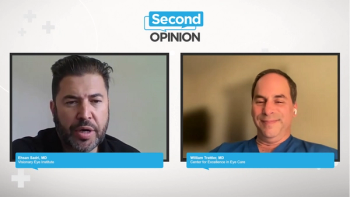
On this segment of Second Opinion, ophthalmologists Ehsan Sadri, MD, and William Trattler, MD, weigh the advent of various lifestyle eye drops and other advances for presbyopia, an age-related eye condition affects more than 130 million Americans over 40. These innovations are capturing the attention of not only ophthalmologists and optometrists but also primary care physicians and other medical specialists. Drs. Sadri and Trattler dissect the market impact on today’s mainstream consumers.
The notable history of the sodium-glucose cotransporter-2 (SGLT2) inhibitor class of drugs began with approval in 2014 as a treatment for type 2 diabetes. Since then, they have been approved by the FDA for treating or reducing risk of a spectrum of cardiovascular and renal disease, regardless of diabetes status. Specialists and a primary care clinician answered the question: Who should prescribe these drugs, specialists or primary care clinicians?
The 2022 American Society of Clinical Oncology Annual Meeting continues to hold its place as the most impactful medical meeting for advancements in the field of cancer treatment, with pivotal presentations across a wide range of different tumor types shaking up the standard of care each year. The editors of CancerNetwork® sat down with some of experts in the field of gastrointestinal oncology to discuss which presentations coming out of ASCO 2022 had the greatest potential to impact the current treatment paradigm and make way into clinical practice.

Disproportionate access to clinical trials remains a critical issue contributing to health disparities for underserved populations nationwide, On this week’s Behind the Science, The American Journal of Managed Care® spoke with several early-stage investigators selected as part of the inaugural 52-physician cohort of Bristol Myers Squibb Foundation's Diversity in Clinical Trials Career Development Program on their motivations for improving representation of underserved communities across the oncology landscape and how they would address the long-standing issue of diversity in clinical trials.
Dr. Brandi Kaye Freeman is a physician dedicated to eradicating the health inequities that impact vulnerable populations through evidence-based practices and improved quality of health care delivery. She is Assistant Professor of Pediatrics and the Associate Vice Chair for Diversity, Equity, and Inclusion for the Department of Pediatrics as well as an Attending Physician at the Child Health Clinic at the Children’s Hospital of Colorado. In these roles, she is a practicing primary care physician and health services researcher whose research portfolio includes developing approaches to improve Diversity and Equity in the Healthcare and investigating best practices to help children thrive in early childhood. As a community leader and advocate, Dr. Freeman dedicates numerous hours to improving the health and wellbeing of minority communities.

For the more than half a million Americans experiencing homelessness each given night, access to quality health care is a prominent issue exacerbated by social determinants of health and coverage issues. On today’s Deep Dive, Michael Hochman, CEO of Scan Group’s Healthcare in Action, speaks with The American Journal of Managed Care® on the street-based medical group approach his organization is taking to reach the medical needs of homeless individuals in California and potential action on a nationwide scale.
Ophthalmologists and retina specialists pull from their years of experience to discuss what they wish they knew when they began their career.

Anders Gilberg, senior vice president for government affairs at MGMA, discusses which issues the organization’s advocacy wing is pursuing.

Arlene S. Bierman, MD, MS, is director of the Center for Evidence and Practice Improvement in the federal Agency for Healthcare Research and Quality (AHRQ) within the U.S. Department of Health and Human Services. She is a general internist, geriatrician, researcher and author of the article, “Realizing the Dream: The Future of Primary Care Research.” Dr. Bierman sat down with Medical Economics to discuss her vision for current and future research in primary care, and the mission of AHRQ.

Practical Cardiology advisory board members sit down with the director of Center for Inherited Cardiac Disease at Penn Medicine, Dr. Anjali Owens, to talk about the current state of management for obstructive hypertrophic cardiomyopathy, often referred to as oHCM, and how the FDA approval of mavacamten might impact care moving forward.
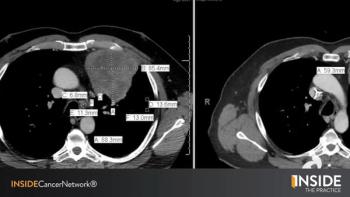
CancerNetwork’s Ariana Pelosci spoke with Suresh G. Nair, MD, Physician in Chief at Lehigh Valley Health Network’s Topper Cancer Institute, about the recent advances made and the top-line tumor tracking system being implemented in the institute. In the interview, Nair discusses the importance of multidisciplinary teams in cancer care, and where he hopes to see the Topper Cancer Institute advance with the future of cancer care.
In this Behind the Science, health care provider burnout is explored. Our two experts detail the history of burnout, its manifestations, and treatments.
On this episode of Deep Dive, we learn how Jeffrey Nau, PhD, took the road less traveled to his role as President and CEO at Oyster Point Pharma. His background is unique in that he brings a life-long dedication to the field of ophthalmology and an ability to understand the science in this specific space. Dr. Nau takes us on his journey, where he started as a technician with a multispecialty ophthalmology practice and prepared patients for pre-LASIK consultations and captured retinal images. Next, he worked at an eye bank where he learned how to harvest organs and corneal tissues. From there, he earned his Master of Medical Science with Drexel University’s College of Medicine and spent time at Wills Eye Hospital in Philadelphia conducting ocular oncology research. He transitioned this experience into ophthalmic drug development and offers advice for clinicians who might consider a move from clinical medicine to the pharmaceutical industry.

Dr. Iriny Salib shares tips for clinicians to get their patients up to date on vaccinations missed during COVID-19, with hopes we can boost immunization rates even higher than they were pre-pandemic.

In this Deep Dive, Nano-Pulse Stimulation (NPS) Technology is up for discussion. What is NPS technology and what is the mechanism of action that it uses to clear benign lesions? Is it covered by insurance and what are the risks of using the CellFX system? All these questions and more are covered in this Deep Dive.

Lauren Natbony, MD, and Deena Kuruvilla, MD, join Second Opinion to talk about real-world experiences with the CGRP Class for migraine.

Experts including Christina Madison, Brenna Veres, Jennifer Cocohoba, and Cassandra Esperant discuss the opportunities, history, and role of pre-exposure prophylaxis, known as PrEP, for HIV care and prevention.

Shirley Lee, CRNP-FNP, MPH, discusses gaps in care and how not closing them can be harmful to patients. Lee is director of a patient navigation program and a nurse practitioner for the Greater Los Angeles Division of Genesis Healthcare Partners and Vice President of Clinical Strategy for Preveta.