Dr. Leon McDougle joins Deep Dive to discuss how the COVID-19 pandemic has exposed, and could help address, racial disparities in healthcare access and outcomes.

Dr. Leon McDougle joins Deep Dive to discuss how the COVID-19 pandemic has exposed, and could help address, racial disparities in healthcare access and outcomes.
Dr. Mehmet Sitki Copur joins Deep Dive to discuss the background, benefits, and current research regarding messenger RNA (mRNA) vaccines and how they could impact the future of cancer care. The two approved mRNA vaccines for the prevention of COVID-19 present an opportunity to learn more about the potential applications of mRNA vaccines for cancer immunotherapy moving forward.

Dr. Guy Mintz joins Wellbeing Checkup to discuss the barrage of challenges that has accompanied the COVID-19 pandemic, and how he manages the stress of the pandemic to avoid burnout.

Dr. Indu Subramanian joins Wellbeing Checkup to offer tips about keeping in touch with nature and the importance of spending time outside.

Dr. Maria Hernandez joins Deep Dive to discuss physician bias.

From heartburn to heart attack, chest pain is linked to a host of medical conditions ranging from mild to potentially deadly. Dr. Timothy Henry joins Inside the Practice to discuss everything you need to know about chest pain, including how to determine when a patient needs to seek emergency care.
A panel of experts joins Behind the Science to discuss new evidence showing why night shift workers are at increased risk of developing certain types of cancer.

Bethany Hall, MSN, joins Deep Dive to discuss pediatric Complex Developmental Trauma (CDT), and how understanding CDT can be helpful when caring for pediatric populations.
Dr. Maurie Markman joins Deep Dive to discuss mRNA vaccines, what we can learn from the development of these products, and how these lessons can apply to cancer therapies.
Dr. Shubham Pant joins Wellbeing Checkup to discuss his recently published book, Food Matters, which focuses on the role that a person’s diet plays in the fight against cancer.
Dr. Norman Sharpless, head of the National Cancer Institute, joins Deep Dive to discuss the 50% decline in U.S. cancer diagnoses in 2020 after the COVID-19 pandemic hit the country. He also discusses what the abrupt decline might mean for future diagnoses and how that could affect treatment.

Dr. Julie Gralow joins Deep Dive to discuss her new position as chief medical officer of the American Society for Clinical Oncology (ASCO). Dr. Gralow speaks about her goals and vision for ASCO and provides updates on ASCO’s TAPUR trial in oncology.
Dr. Sheldon Fields joins Inside the Practice to discuss a partnership between the National Black Nurses Association and the National Institutes of Health which forms the ongoing All of Us research program.
A panel of experts joins Behind the Science to discuss the challenges of managing pulmonary arterial hypertension
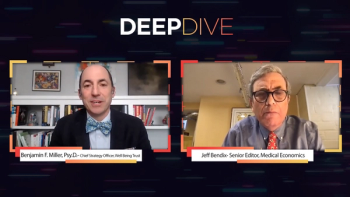
Dr. Benjamin Miller joins Deep Dive to discuss how only 1 in 3 primary care practices in the United States have a mental health expert on staff, compared to 90% of in other parts of the world. As more primary care physicians get tapped to distribute COVID-19 vaccines, Dr. Miller talks about how the United States is failing to address the growing mental health epidemic within the pandemic.
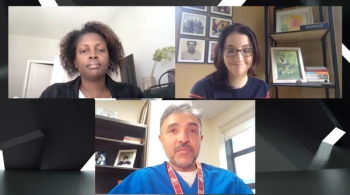
Sateria Venable and Dr. Ayman Al Hendy join Inside the Practice to discuss patient-physician collaboration when it comes to addressing and managing uterine fibroids.

Dr. Marc Rosenberg and Bash Halow join Second Opinion to dive into a few potentially puzzling scenarios right from the floor of a veterinarian's office.

Five experts from throughout the healthcare continuum join Behind the Science to discuss the value of the pharmacist in various aspects of the COVID-19 vaccination process in the United States.
A panel of Ophthalmology experts join Behind the Science to discuss the cases that keep them up at night.
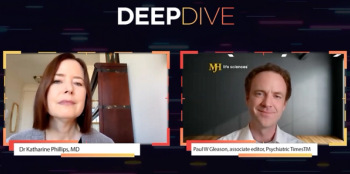
Dr. Katherine Phillips joins Deep Dive to discuss body dysmorphic disorder.
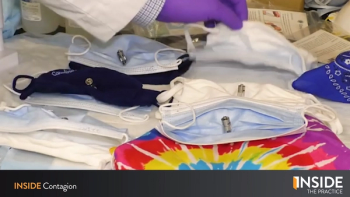
Dr. Emily Sickbert-Bennett joins Inside the Practice to discuss new research on double-masking, showing its benefit in prevention SARS-CoV-2 infection in users, regardless of their chosen materials.
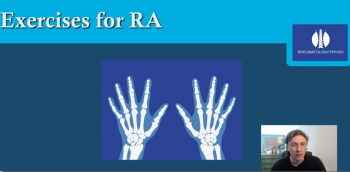
While people with rheumatoid arthritis may be tempted to avoid exercise, it can actually help strengthen their muscles and increase flexibility. Jack March, a physiotherapist specializing in rheumatoid arthritis, joins Inside the Practice to explain the key benefits of exercise for managing the condition and demonstrates some crucial exercises for wellbeing.
A panel of experts joins Behind the Science to discuss the advice they would give to someone who may be grappling with a new diagnosis of cancer

Dr. Brian Covino joins Inside the Practice to discuss prior authorization requirements, its issues and how the use of electronic prior authorizations may help.

Dr. Charles Lee joins Deep Dive to discuss the importance of a new law in Oregon that requires pharmacies to print prescription labels in multiple languages. Dr. Lee talks about how patients with limited english proficiency are more likely to make mistakes on medication dosing.

Tiffany Dogan joins Wellbeing Checkup and offers advice for infection prevention and ways to battle stress.
Dr. Jessica Ailani and Dr. Deena Kuruvilla join Second Opinion to discuss managing migraines.

Dr. Christoph Correll joins Wellbeing Checkup to promote ways for psychiatrists and other doctors to take care of their own mental wellbeing during the ongoing pandemic.
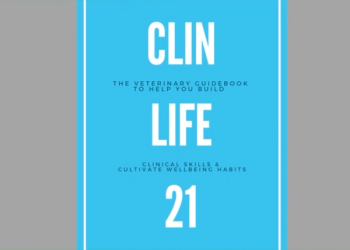
All four authors of the book, "ClinLife-21" join Wellbeing Checkup to discuss the inspiration behind their new veterinary guidebook.